Estimation Of Background Leakage In Existing Water Distribution Network Presentation
| Introduction | ||
|---|---|---|
| Background leakage estimation in water distribution networks. Importance of identifying and addressing background leakage. Overview of the presentation outline. | ||
| 1 | ||
| Definition of Background Leakage | ||
|---|---|---|
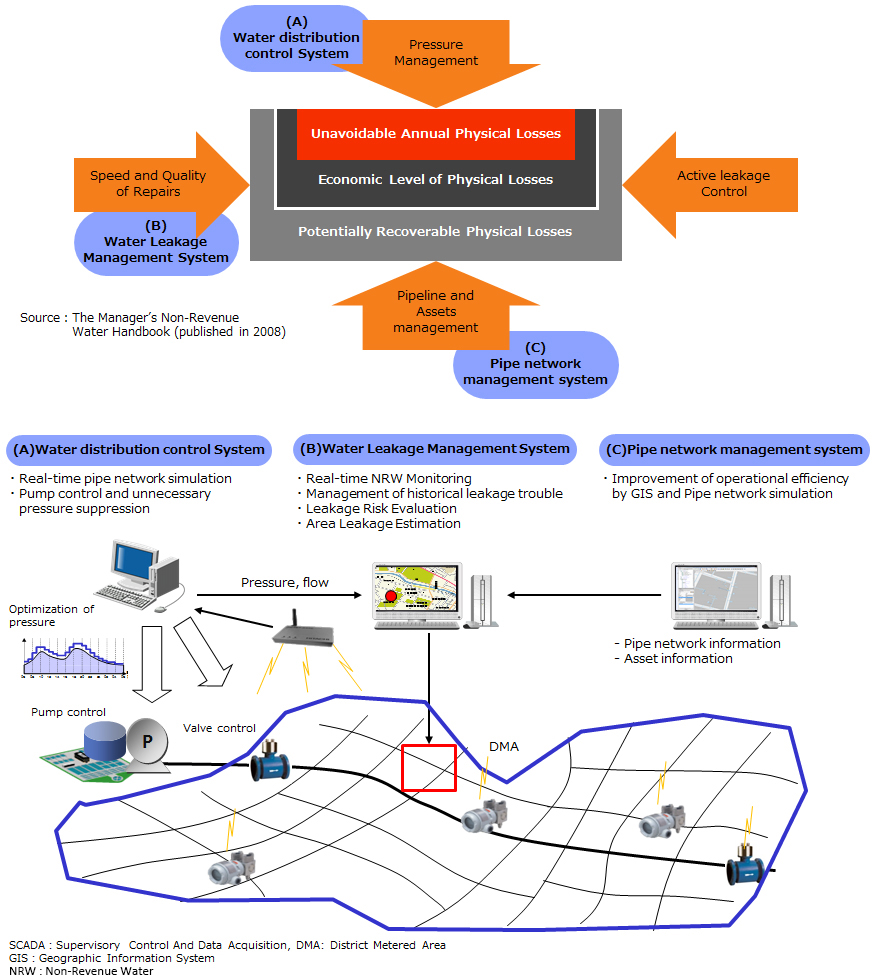
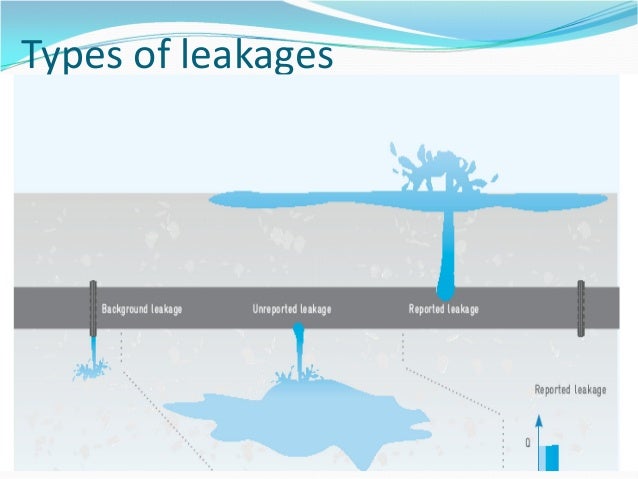
| Background leakage refers to the continuous, low-level water losses that occur in a distribution network under normal operating conditions. It includes leaks from joints, fittings, and small cracks in pipes that may not be easily detectable. Background leakage is often a result of aging infrastructure, poor maintenance, or construction defects. | ||
| 2 | ||
| Methods for Estimating Background Leakage | ||
|---|---|---|
| Flow Balance Method: Compares the total water supplied to an area with the sum of customer metered consumption and authorized use, assuming any excess is due to background leakage. District Metered Area (DMA) Method: Involves dividing the network into smaller zones to identify areas with higher leakage rates, enabling targeted leak detection and repair efforts. Statistical Analysis: Utilizes historical data, such as pressure and flow measurements, to estimate background leakage based on patterns and trends. |  | |
| 3 | ||
| Challenges in Estimating Background Leakage | ||
|---|---|---|
| Limited Data Availability: Lack of accurate and complete data on water supply, customer consumption, and system losses can hinder accurate estimation. Variable Demand Patterns: Fluctuations in water demand can make it difficult to differentiate between customer consumption and background leakage. Accuracy of Measurement Equipment: Inaccurate or malfunctioning flow meters and pressure sensors can affect the reliability of leakage estimation. | ||
| 4 | ||
| Benefits of Estimating Background Leakage | ||
|---|---|---|
| Improved Water Efficiency: Identifying and reducing background leakage helps conserve water resources and optimize water supply management. Cost Savings: Reducing background leakage reduces the need for additional water treatment, pumping, and infrastructure investments. Enhanced System Reliability: Addressing background leakage improves water pressure, reduces pipe bursts, and minimizes service disruptions. | ||
| 5 | ||

| Case Study: Background Leakage Estimation in City X | ||
|---|---|---|
| City X implemented a district metered area (DMA) approach to estimate background leakage. By dividing the network into smaller zones, they could identify areas with higher leakage rates and prioritize leak detection and repair efforts. The DMA approach resulted in a 20% reduction in background leakage and significant water conservation. | ||
| 6 | ||

| Conclusion | ||
|---|---|---|
| Estimating background leakage in existing water distribution networks is crucial for sustainable water management. Various methods, such as flow balance, DMA, and statistical analysis, can be used to estimate background leakage. Overcoming challenges and accurately estimating background leakage can lead to improved water efficiency, cost savings, and enhanced system reliability. | ||
| 7 | ||
