Green Technology Presentation
| Introduction to Green Technology | ||
|---|---|---|
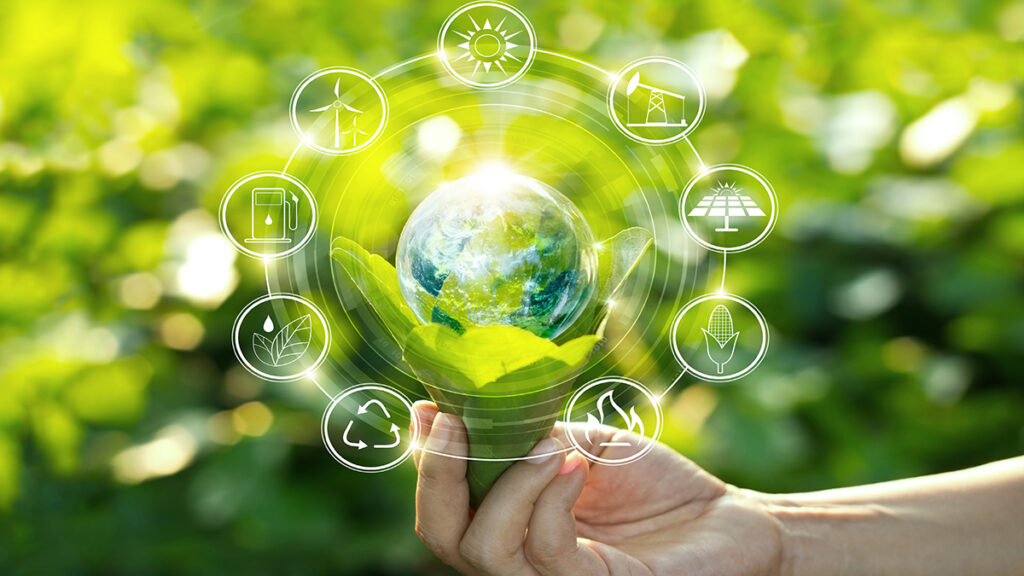
| Green technology refers to the development and application of products, services, and systems that use renewable resources and have a minimal impact on the environment. It aims to promote sustainability, reduce pollution, and conserve natural resources. Green technology encompasses various sectors, including energy, transportation, construction, and waste management. | ||
| 1 | ||
| Benefits of Green Technology | ||
|---|---|---|
| Green technology helps reduce greenhouse gas emissions, leading to improved air quality and mitigating climate change. It promotes energy efficiency, resulting in lower energy consumption and reduced utility bills. Adopting green technology can create new job opportunities and boost economic growth. | ||
| 2 | ||

| Renewable Energy | ||
|---|---|---|
| Renewable energy sources, such as solar, wind, and hydropower, offer a sustainable alternative to fossil fuels. These sources are abundant, clean, and can be harnessed without depleting natural resources. Investing in renewable energy infrastructure promotes energy independence and reduces reliance on non-renewable sources. | ||
| 3 | ||

| Energy-efficient Buildings | ||
|---|---|---|
| Green building practices focus on designing and constructing energy-efficient structures. Energy-efficient buildings incorporate features like proper insulation, efficient HVAC systems, and energy-saving appliances. These buildings reduce energy consumption and carbon footprint while creating healthier and more comfortable living environments. | ||
| 4 | ||

| Sustainable Transportation | ||
|---|---|---|
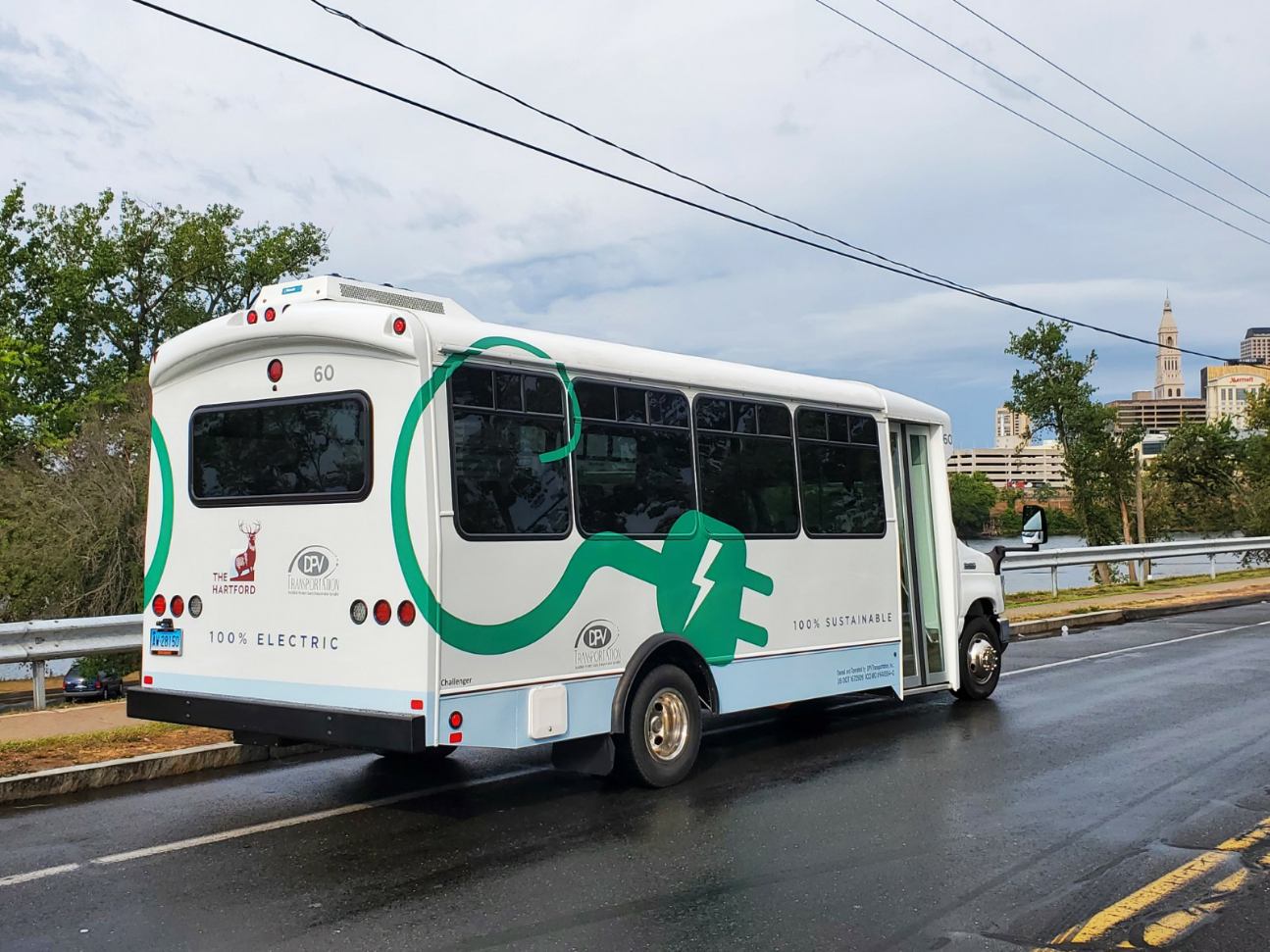
| Green technology in transportation includes electric vehicles, hybrid cars, and public transportation systems. Electric vehicles produce zero tailpipe emissions and contribute to cleaner air in urban areas. Investing in sustainable transportation infrastructure reduces reliance on fossil fuels and decreases traffic congestion. | ||
| 5 | ||
| Waste Management | ||
|---|---|---|
| Green technology offers innovative solutions for waste management, such as recycling, composting, and waste-to-energy conversion. Recycling reduces the need for raw materials and saves energy compared to manufacturing products from scratch. Waste-to-energy technologies convert waste into renewable energy sources, reducing landfill space and greenhouse gas emissions. | ||
| 6 | ||

| Water Conservation | ||
|---|---|---|
| Green technology promotes water conservation through efficient irrigation systems, rainwater harvesting, and wastewater treatment. Efficient irrigation systems help reduce water waste in agriculture and landscaping. Rainwater harvesting collects and stores rainwater for various purposes, such as irrigation and toilet flushing. | ||
| 7 | ||

| Green IT | ||
|---|---|---|
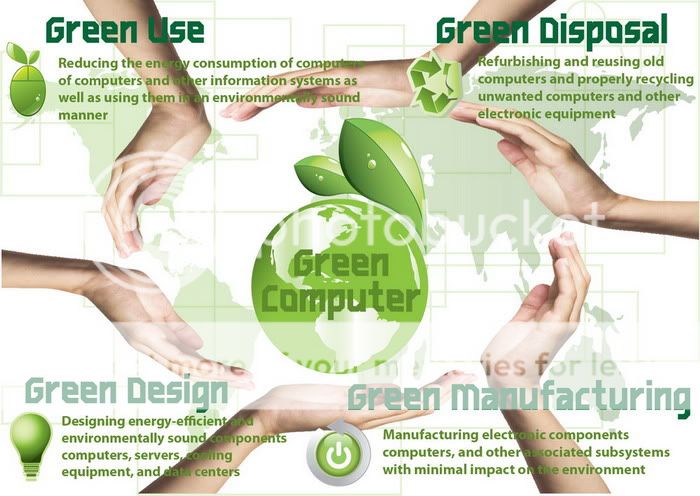
| Green IT focuses on minimizing the environmental impact of information technology. Practices include virtualization, energy-efficient servers, and responsible e-waste management. By adopting green IT practices, businesses can reduce energy consumption and electronic waste. | ||
| 8 | ||
| Government Support and Policies | ||
|---|---|---|
| Governments play a crucial role in promoting green technology through supportive policies, incentives, and regulations. Many countries have implemented renewable energy targets and financial incentives for green technology adoption. Government support fosters innovation and drives the transition to a greener economy. | ||
| 9 | ||
| Conclusion | ||
|---|---|---|
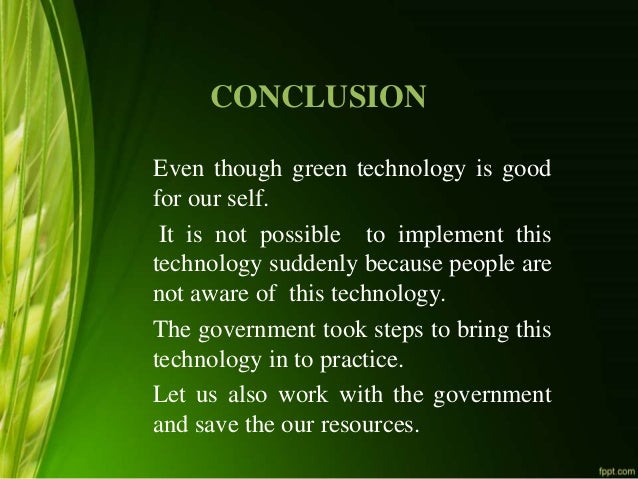
| Green technology offers solutions to address environmental challenges and promote sustainability. It provides economic benefits, improves quality of life, and helps combat climate change. Embracing green technology is essential for a sustainable future and a healthier planet. | ||
| 10 | ||