GDP Labor And Capital Share Presentation
| Introduction | ||
|---|---|---|
| The distribution of GDP between labor and capital is a key measure of income inequality in an economy. It reflects how the rewards of production are divided between workers and owners of capital. Studying the trends in labor and capital share helps us understand the dynamics of economic growth and income distribution. | ||
| 1 | ||

| Definition of Labor and Capital Share | ||
|---|---|---|
| Labor share refers to the portion of GDP that goes to workers in the form of wages, salaries, and benefits. Capital share refers to the portion of GDP that goes to owners of capital in the form of profits, dividends, and interest. Labor and capital shares are complementary measures that sum up to the total GDP. | ||
| 2 | ||

| Factors Influencing Labor Share | ||
|---|---|---|
| Technological advancements can affect labor share by substituting workers with machines, reducing labor's share of value-added. Globalization and trade liberalization can lead to labor-intensive industries moving to lower-wage countries, reducing labor share. Changes in labor market institutions and policies, such as minimum wage laws and collective bargaining, can impact labor share. | ||
| 3 | ||

| Factors Influencing Capital Share | ||
|---|---|---|
| Capital-intensive industries, such as manufacturing and finance, tend to have higher capital shares due to the importance of capital in production. Corporate profits can be influenced by factors like corporate tax rates, business regulations, and market competition. Investment in physical and intellectual capital, such as machinery, technology, and research and development, can increase capital share. | ||
| 4 | ||
| Historical Trends in Labor and Capital Share | ||
|---|---|---|
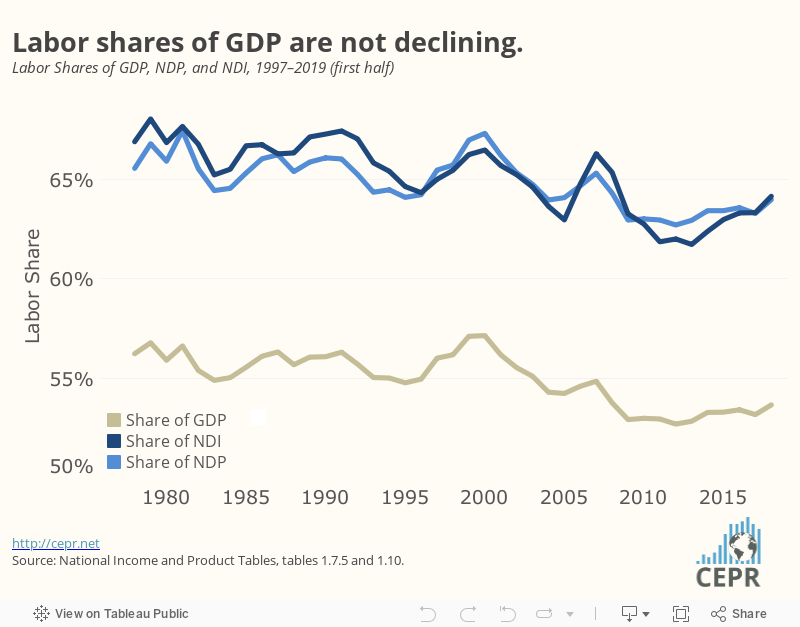
| In many developed countries, labor share has been declining over the past few decades, while capital share has been rising. This trend can be attributed to technological progress, globalization, and changes in labor market institutions. However, there are variations across countries and industries, with some sectors experiencing different patterns of labor and capital share. | ||
| 5 | ||
| Implications of Changing Labor and Capital Share | ||
|---|---|---|
| Decreasing labor share can lead to income inequality and reduced purchasing power for workers, potentially affecting aggregate demand. Increasing capital share can concentrate wealth and income in the hands of a few, exacerbating economic inequality. Understanding the implications of these trends is crucial for policymakers in designing effective strategies for inclusive growth. | ||
| 6 | ||
| Measurement Challenges | ||
|---|---|---|
| Measuring labor and capital shares accurately can be challenging due to data limitations and conceptual issues. Different methodologies, such as national accounts, surveys, and sector-specific data, can yield different results. Accounting for the informal sector, self-employment, and non-wage compensation adds complexity to the measurement of labor share. | ||
| 7 | ||

| Policy Implications | ||
|---|---|---|
| Policies that promote investment in human capital, such as education and skills training, can help improve labor share. Strengthening labor market institutions, such as minimum wage laws and collective bargaining rights, can support fairer income distribution. Ensuring a competitive environment, promoting innovation, and reducing barriers to entry can help balance capital share. | ||
| 8 | ||

| International Comparisons | ||
|---|---|---|
| International organizations like the OECD and World Bank monitor and compare labor and capital shares across countries. These comparisons provide insights into the effectiveness of different policy frameworks and their impact on income distribution. International cooperation and knowledge exchange can help identify best practices and policy solutions to address income inequality. | ||
| 9 | ||

| Conclusion | ||
|---|---|---|
| The distribution of GDP between labor and capital is a crucial aspect of economic growth and income inequality. Understanding the factors influencing labor and capital share helps policymakers design effective strategies for inclusive and sustainable development. Ongoing research and international collaboration are necessary to monitor and address the evolving dynamics of labor and capital share. | ||
| 10 | ||

| References (download PPTX file for details) | ||
|---|---|---|
| Author(s) Last Name, First Initial. (Year). T... Author(s) Last Name, First Initial. (Year). T... Author(s) Last Name, First Initial. (Year). T... |  | |
| 11 | ||