Characterization By XRD Presentation
| Introduction to Characterization by XRD | ||
|---|---|---|
| X-ray diffraction (XRD) is a powerful technique used to analyze the atomic and molecular structure of materials. XRD provides information about crystal structure, phase composition, crystallinity, and the presence of impurities. XRD is widely used in various fields such as materials science, geology, chemistry, and pharmaceuticals. | ||
| 1 | ||
| Principles of XRD | ||
|---|---|---|
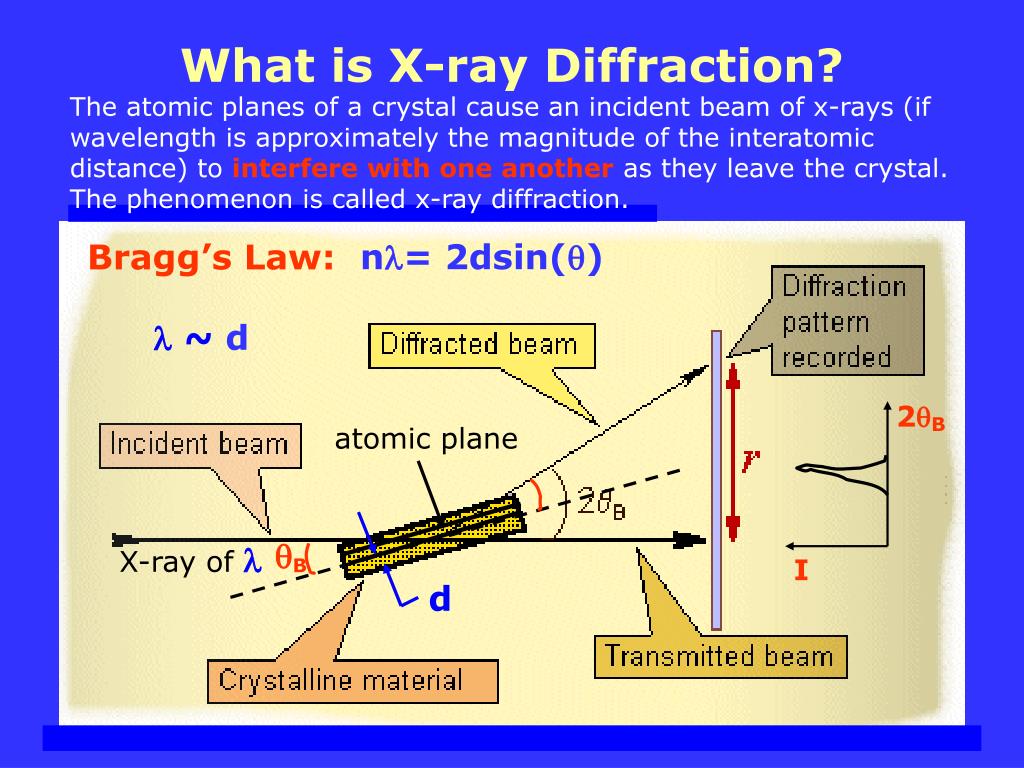
| XRD is based on the phenomenon of X-ray diffraction, where X-rays are scattered by the crystal lattice of a material. Bragg's Law, which relates the angle of incidence of X-rays to the spacing between crystal planes, is used to determine the crystal structure. The diffracted X-rays are detected by a detector, and the resulting diffraction pattern is analyzed to obtain information about the material. | ||
| 2 | ||

| Applications of XRD | ||
|---|---|---|
| Phase identification: XRD can determine the presence of different crystalline phases in a sample, aiding in material identification. Crystal structure determination: XRD can provide detailed information about the arrangement of atoms within a crystal lattice. Quantitative analysis: XRD can be used to determine the relative amounts of different phases present in a sample. | ||
| 3 | ||

| Sample Preparation | ||
|---|---|---|
| Samples for XRD analysis should be finely powdered to ensure a homogeneous representation of the material. The sample should be free of impurities and air bubbles, as these can affect the diffraction pattern. Depending on the material, additional preparation steps such as grinding, sieving, or drying may be required. | ||
| 4 | ||

| Instrumentation | ||
|---|---|---|
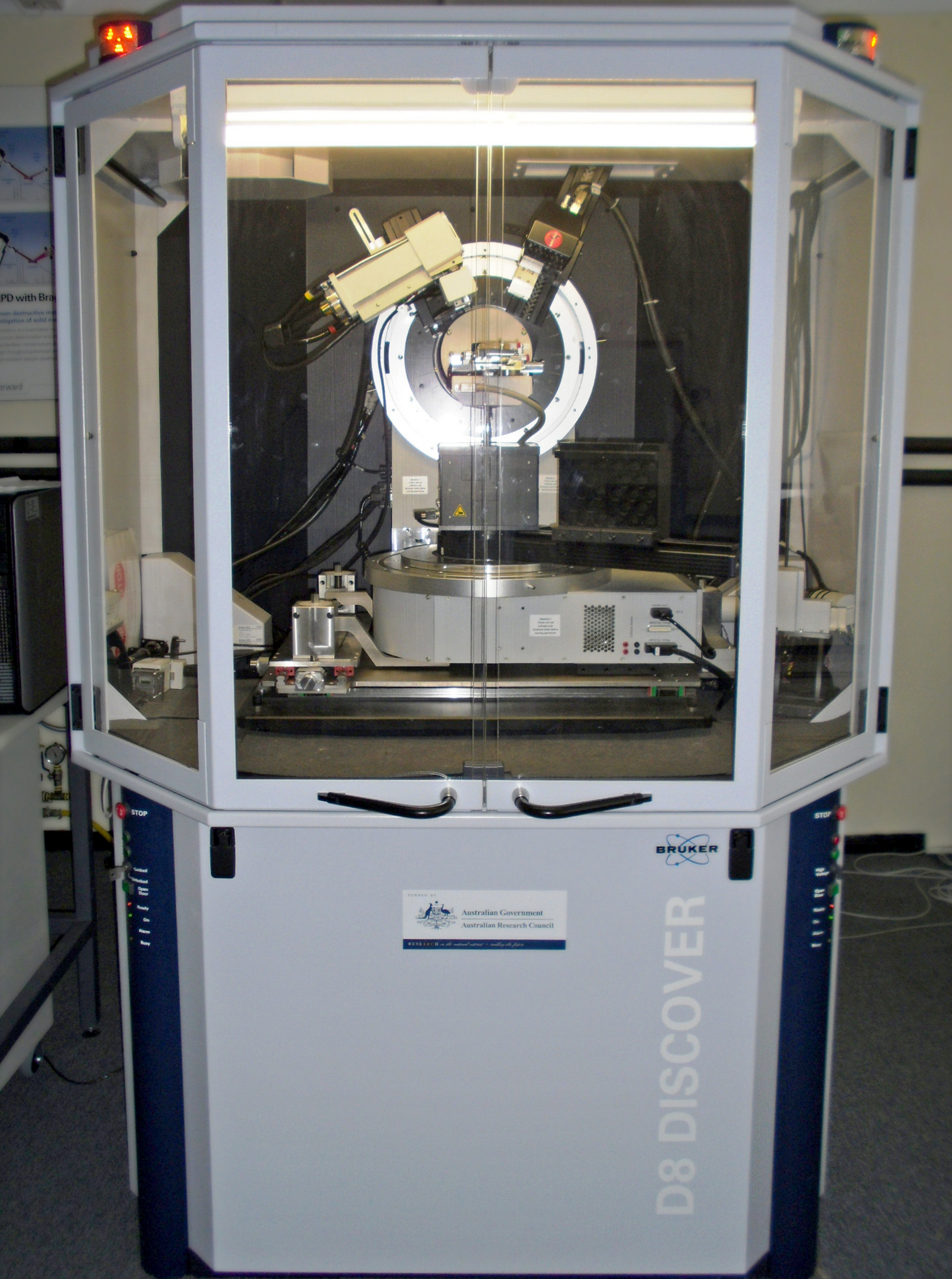
| XRD instruments consist of a source of X-rays, a sample holder, a detector, and a computer for data analysis. X-ray sources can be either laboratory-based (X-ray tube) or synchrotron-based, depending on the desired resolution and intensity. Detectors can be scintillation detectors, proportional counters, or solid-state detectors, and their choice depends on the application. | ||
| 5 | ||
| Data Analysis | ||
|---|---|---|
| The diffraction pattern obtained from XRD is typically represented as a graph of intensity (y-axis) versus diffraction angle (2θ, x-axis). Peak positions, intensities, and shapes in the diffraction pattern are analyzed to determine crystal structure and phase composition. Software programs are available to assist in data analysis, including peak fitting, phase identification, and crystal structure determination. | ||
| 6 | ||

| Limitations of XRD | ||
|---|---|---|
| XRD is limited to crystalline materials and cannot provide information about amorphous materials or liquids. The size of the crystalline domain affects the intensity and resolution of diffraction peaks, limiting the detection of small crystalline sizes. XRD is a non-destructive technique, but it requires a representative sample, which may not always be possible for certain materials. | ||
| 7 | ||

| Advantages of XRD | ||
|---|---|---|
| XRD is a widely available technique, with instruments found in many research laboratories and industrial facilities. It provides valuable information about crystal structure and phase composition, aiding in material characterization and quality control. XRD is a non-destructive technique, allowing for multiple measurements on the same sample without altering its structure. | ||
| 8 | ||

| Recent Advances in XRD | ||
|---|---|---|
| High-resolution XRD: Advances in instrumentation have improved the resolution and sensitivity of XRD, allowing for the detection of smaller crystal sizes and more detailed structural information. In situ and operando XRD: XRD can now be performed under specific environmental conditions, such as high temperature, high pressure, or in the presence of gases, enabling the study of materials under real-world conditions. Time-resolved XRD: By using ultrafast X-ray sources, it is now possible to capture the dynamics of structural changes in materials on a picosecond timescale. |  | |
| 9 | ||
| Conclusion | ||
|---|---|---|
| X-ray diffraction (XRD) is a powerful technique for the characterization of crystalline materials. It provides information about crystal structure, phase composition, and crystallinity. XRD is widely used in various fields and continues to evolve with advances in instrumentation and data analysis methods. | ||
| 10 | ||
