Anti Dumping Measures In International Business Presentation
| Title: Introduction to Anti Dumping Measures | ||
|---|---|---|
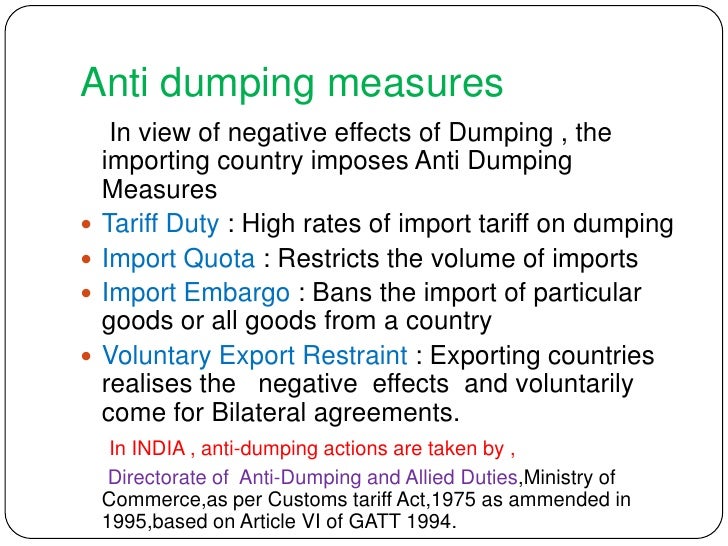
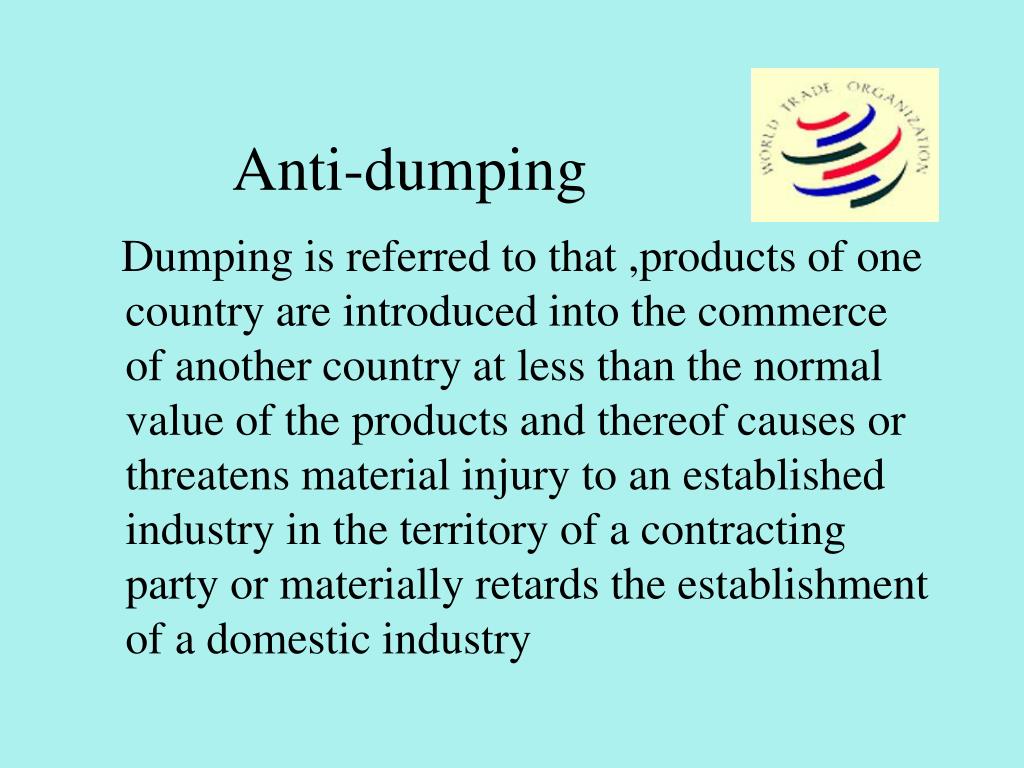
| Anti dumping measures are trade remedies implemented by governments to address unfair trade practices. Dumping occurs when a foreign company sells its products in another country at a price lower than its normal value. Anti dumping measures aim to protect domestic industries from the negative effects of such unfair trade practices. | ||
| 1 | ||
| Title: Anti Dumping Investigation Process | ||
|---|---|---|
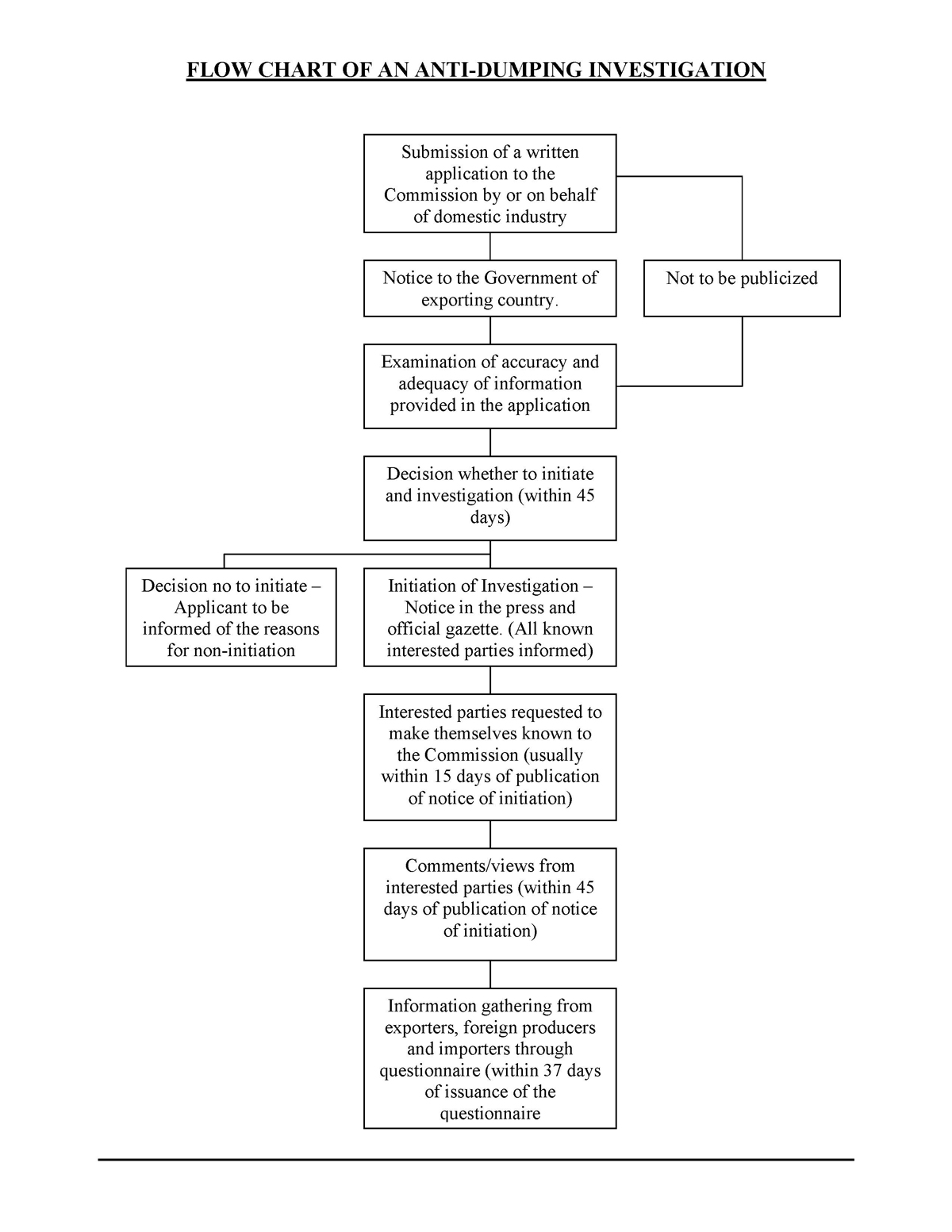
| The anti dumping investigation process involves several steps, including filing a complaint, preliminary investigation, and final determination. Complaints can be filed by domestic industries or trade associations, alleging the existence of dumping and resulting injury. The investigating authority conducts a preliminary investigation to determine if there is sufficient evidence of dumping and injury. | ||
| 2 | ||
| Title: Calculating Dumping Margins | ||
|---|---|---|
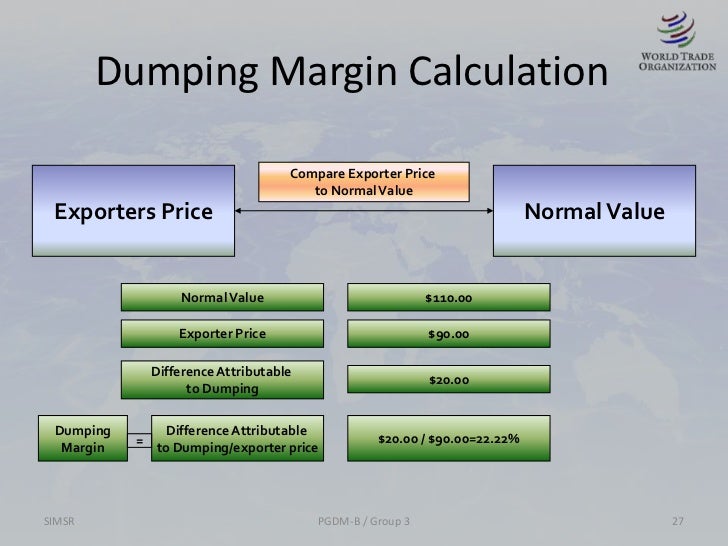
| Dumping margins are calculated by comparing the export price of the product with its normal value in the exporting country. The normal value is typically the domestic price or the cost of production plus a reasonable profit margin. If the export price is lower than the normal value, a dumping margin is established. | ||
| 3 | ||
| Title: Imposing Anti Dumping Duties | ||
|---|---|---|
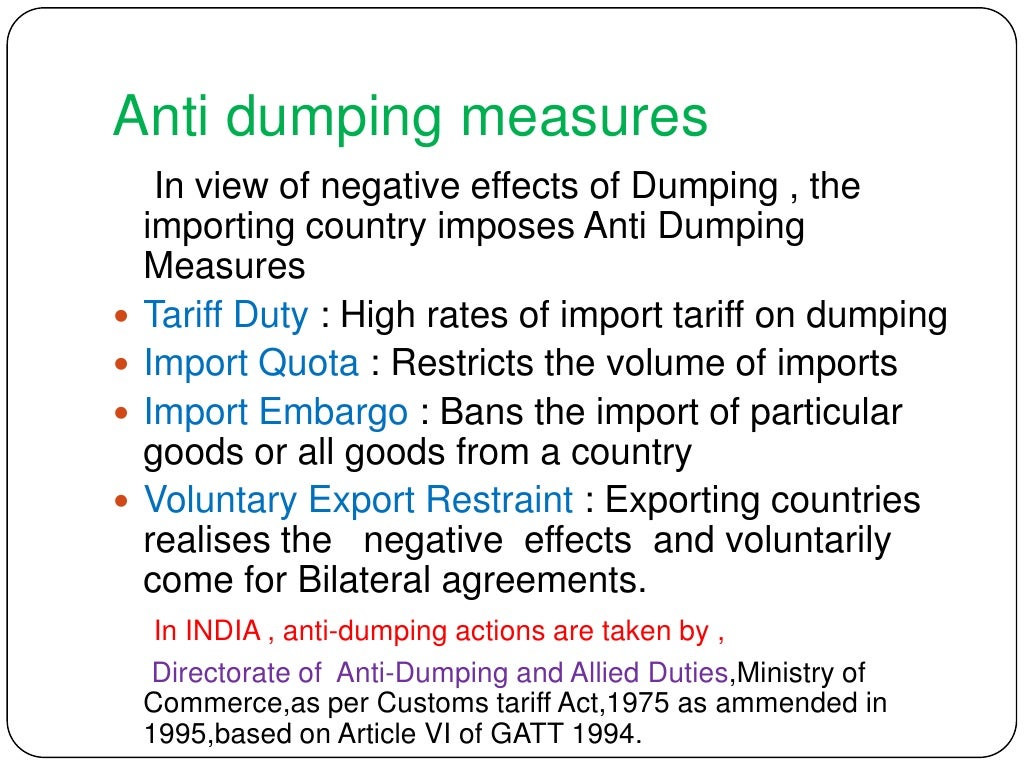
| Anti dumping duties are imposed to offset the unfair competitive advantage gained by dumped imports. The amount of the duty is equal to the dumping margin established during the investigation. Anti dumping duties can be ad valorem (percentage of the import value) or specific (fixed amount per unit). | ||
| 4 | ||
| Title: Duration of Anti Dumping Measures | ||
|---|---|---|
| Anti dumping measures are not permanent and are typically imposed for a limited period, usually five years. However, measures can be extended if it is determined that the removal of duties would lead to a continuation or recurrence of dumping and injury. Sunset reviews are conducted to assess whether the measures should be continued, modified, or terminated. | ||
| 5 | ||
| Title: Effects of Anti Dumping Measures | ||
|---|---|---|
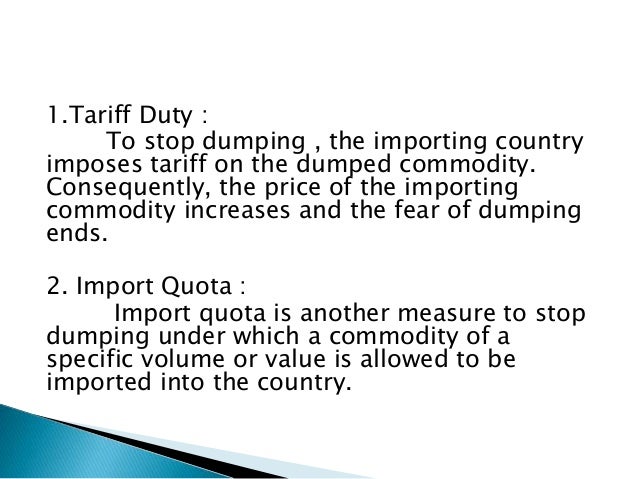
| Anti dumping measures provide temporary relief to domestic industries by reducing the impact of dumped imports. They can help protect jobs, preserve market share, and restore fair competition in the domestic market. However, they may also result in higher prices for consumers and reduce the availability of imported goods. |  | |
| 6 | ||
| Title: Challenges in Implementing Anti Dumping Measures | ||
|---|---|---|
| Determining the normal value and establishing the existence of injury can be complex and time-consuming. There is a risk of retaliation from trading partners who may view the measures as protectionist. Domestic industries may become overly reliant on anti dumping measures instead of improving their competitiveness. | ||
| 7 | ||
| Title: Anti Dumping Measures and WTO Rules | ||
|---|---|---|
| Anti dumping measures are subject to rules and disciplines under the World Trade Organization (WTO). WTO agreements provide guidelines on how investigations should be conducted and when measures can be imposed. The WTO also provides a framework for resolving disputes related to anti dumping measures. | ||
| 8 | ||
| Title: Recent Trends in Anti Dumping Measures | ||
|---|---|---|
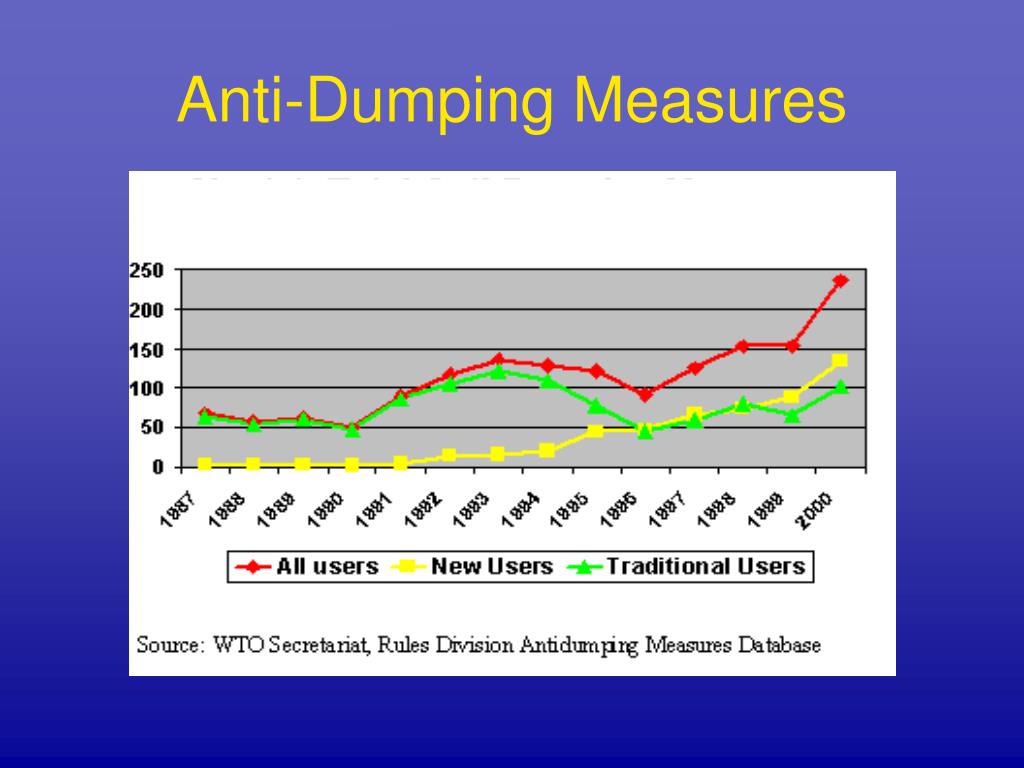
| There has been an increase in the use of anti dumping measures globally in recent years. Developing countries have become more active in initiating anti dumping investigations. Industries such as steel, chemicals, and textiles have been the most frequent targets of anti dumping measures. | ||
| 9 | ||
| Title: Conclusion | ||
|---|---|---|
| Anti dumping measures play a crucial role in maintaining fair trade practices and protecting domestic industries. They are implemented through a detailed investigation process and can result in the imposition of anti dumping duties. However, it is essential to strike a balance between protecting domestic industries and ensuring the benefits of free trade. | ||
| 10 | ||